
Gabapentin for Dogs: Dosage, Side Effects, and Natural Alternatives
Nali Macklin - June 17th, 2020
For dog owners living with a dog suffering from neurological disorders, pain, or anxiety, daily life can be scary, unpredictable, and heartbreaking. Not only knowing that your dog is in chronic pain, but the uncertainty of when the next seizure or epileptic fit will come is a sad reality that many owners face.
Today we will specifically look at a drug called Gabapentin for dogs; what it does, how safe it is, its possible side effects, as well as take a look at some natural alternatives.
Table Of Contents
What is Gabapentin?
What is Gabapentin used for in dogs?
Safety of Gabapentin for dogs
Gabapentin dosage for dogs
Side effects of Gabapentin in dogs
Price of Gabapentin
Natural alternatives to Gabapentin for dogs
What is Gabapentin?
Gabapentin is a type of anticonvulsant drug that is usually given to increase the effectiveness of other seizure medications in dogs, but it can also be used for pain and anxiety. It is a common drug for humans, but can also be effective for dogs, cats, and other animals.
Seizures occur when there is abnormal electrical activity in the brain. Scientists aren’t sure exactly how Gabapentin works, but it has been shown to help calm this electrical activity and change levels of certain neurotransmitters, like serotonin.
Gabapentin has a similar chemical structure to the neurotransmitter GABA. This neurotransmitter helps calm down brain activity.
Gabapentin is a generic drug. Brand names for this drug include Aclonium®, Equipax®, Gabarone®, Gantin®, Gralise®, Neurontin®, Neurostil®, and Progresse®.
Because it does take a while for Gabapentin to have full effect, this drug is likely more commonly prescribed for chronic pain rather than temporary pain.
What is Gabapentin used for in dogs?
Gabapentin is often prescribed to treat:
- Anxiety – Gabapentin can be an option for managing stress in dogs if therapies alone are not enough. It can be effective for both sudden (i.e., fireworks, thunderstorms) and predictable (i.e., car rides, vet visits) stressful events.
- Pain - Veterinarians will, in some cases, prescribe Gabapentin to dogs suffering from chronic pain, especially when it is associated with the nervous system.
- Seizures – Gabapentin is sometimes prescribed for dogs with seizures who are not responding well to the main epilepsy medications. Combining these drugs with Gabapentin can sometimes help them work better.
Safety of Gabapentin for dogs
Gabapentin is currently not FDA approved for veterinary use, but it is commonly accepted and prescribed by vets. It is generally speaking a safe drug and appears to have few side effects, even when an overdose happens.
However, one study showed that high doses of Gabapentin caused pancreatic cancer in mice. A larger study in humans found that Gabapentin did not increase risk for this cancer, though, and no studies have been done in dogs. Still, you might want to ask your veterinarian if your dog’s breed is susceptible to this disease (e.g., Airedale Terriers, Boxers, Labrador Retrievers, Cocker Spaniels).
Also, because this drug passes through the kidneys, it may not be suitable for dogs that have kidney disease.
Gabapentin Dosage for dogs
Your vet will determine the dosage of gabapentin for your dog as its a prescription drug. The following are the generally prescribed dose ranges:
- Seizures: 4.5 to 13.6 mg per pound of your dog’s weight, every 8-12 hours.
- Pain: 1.4 - 5 mg per pound of your dog’s weight, every 8-12 hours.
Side effects of Gabapentin in dogs
The most common side effects of Gabapentin include the following:
- Sedation or lethargy
- Wobbliness and incoordination
You should gradually increase the medication over time until you reach the recommended dosage to alleviate these side effects.
Other more serious side effects may occur. If you notice the following symptoms, you should contact your vet:
- Difficulty breathing
- Blue tongue or gums
- Swelling of the face/muzzle
- Vomiting
- Diarrhea
- Excessive drooling
As with any prescription drug, your vet will consider how your dog’s other medications might interact before prescribing Gabapentin.
Price of Gabapentin
According to one popular online pet pharmacy, the following are prices sold per capsule depending on the dosage.
| 100mg | 300mg | 400mg |
|---|---|---|
| $0.24 | $0.29 | $0.34 |
Natural Alternatives to Gabapentin for dogs
Further research is needed to fully draw a conclusion on CBD for anxiety, pain, and seizures in dogs. However, tens of thousands of small studies and anecdotal evidence from pet parents have proven that it has great potential.
If you consider using CBD for your dog we suggest doing so in coordination with your vet, as only they are qualified to diagnose and treat health problems in dogs. Drug interactions are also possible, in fact, CBD can interact with Gabapentin, potentially causing increased drowsiness.
Another issue you’ll likely run into is the lack of standardized dosage and quality control in dog CBD products. We suggest broad spectrum CBD, as it maximizes the benefits of the hemp plant while eliminating psychoactive side effects; something most pet parents want to avoid.
With CBD oil placed in your dog’s mouth, we suggest a starting dose of 0.45mg/lb (1mg/kg) twice daily, with a gradual increase to 0.9mg/lb (2mg/kg) if necessary.
If your dog won’t allow you to place a dropper in their mouth, then CBD dog treats are a great option. With CBD treats we recommend a higher dosage of 1.3– 2.7mg/lb (3-6mg/kg) twice daily, as less CBD makes it to the bloodstream after it’s digested.
While CBD dosage isn’t an exact science, you have a much higher chance of success when using a weight-based dosage method.
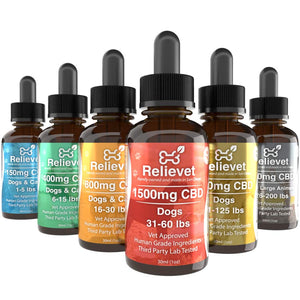
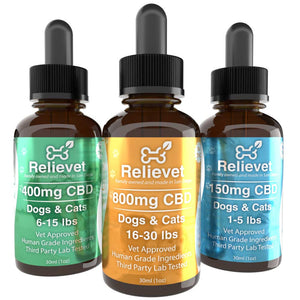
If that all sounds a bit complicated, our CBD dog treats and oils come with a dosing table printed right on the bottle, which is easy to use and will provide the above amount of CBD for your dog.

Popular Products













Biscuit's Story

To say Biscuit lived an active life would be an understatement. Unfortunately, at the age of 10, she started to limp after trips to the dog park.
It broke my heart to see her in pain doing what she loved the most. I started feeding her a raw food diet and added high-quality supplements to ensure her nutritional needs were met. Unfortunately, while she loved the food, the limping persisted. I decided to go to the vet. They quickly diagnosed her with osteoarthritis and prescribed a drug to help.
Her limping stopped, and she was in less visible pain. For the first week, it seemed that this was the solution. A few days later, it was to my absolute shock that she...
Recent Posts:


CBD Oil for Dogs in Thunderstorms


CBD for IVDD in Dogs – Does It Work?


CBD for Dogs with Cancer


CBD for Cats with Cancer


CBD for Dogs with Hip Dysplasia

CBD Oil for Cats with Kidney Disease
Read on to find out if CBD oil can help cats with kidney disease.


CBD for Aggressive Dogs

CBD for Dog Pain


CBD For Dogs Anxiety

CBD Oil for Dog Seizures


What Is The Best CBD Oil For Dogs With Arthritis?

Dr. Nicole Wanner is a veterinarian and published scientific researcher. She studies the effects of CBD as a Ph.D. candidate.